
Navigating Beauty Sponge Sourcing in Indonesia: Technical Standards & OEM Ecosystem
An in-depth analysis of high-performance beauty applicators tailored for Indonesia's tropical climate, BPOM regulatory standards, and expanding D2C cosmetics brands.
The Indonesian beauty landscape is undergoing an unprecedented renaissance. Driven by digitally savvy Gen Z consumers, a expanding middle class, and the explosive growth of domestic powerhouses (often referred to as Beauty Lokal), the demand for high-tier beauty applicators has shifted from mass-market low-grade latex foam to precision-engineered hydrophilic non-latex blending beauty sponges. For sourcing directors, brand managers, and cosmetic founders looking for top-trusted blending beauty sponge manufacturers and factories, evaluating structural pore density, bio-based raw materials, antimicrobial defense, and OEM customization capabilities is paramount to building consumer trust.
1. The Science of Hydrophilic Non-Latex Polyurethane: Why Material Choice Matters in Indonesia
Historically, legacy cosmetic sponges relied on NBR (Nitrile Butadiene Rubber) or natural rubber latex. In tropical regions like Southeast Asia, latex sponges degrade rapidly, oxidize, lose elasticity, and frequently trigger contact dermatitis among sensitive skin demographics. Modern private-label brand leaders exclusively specify Hydrophilic Polyurethane (PU) for their beauty egg and blender manufacturing runs.
When engineered correctly, hydrophilic polyurethane creates an interconnected micro-porous matrix. Upon contact with water, the sponge matrix absorbs fluid within its open-cell structure, expanding by 30% to 50% in volumetric size. This physical transformation creates two massive functional advantages:
- Zero Formula Absorption Trap: The expanded water wall prevents thick liquid foundation, BB creams, and concealers from seeping into the core of the sponge, ensuring 45% less liquid product consumption per application.
- Airbrush Pore-Blurring Stippling: The ultra-fine cell micro-diameter (ranging between 20 to 50 microns) mirrors human pore density, allowing foundation to be stippled effortlessly onto the skin without leaving streak marks or cakey patches.
| Performance Benchmark | Hydrophilic Polyurethane (Next-Gen OEM) | Standard Latex / NBR Foam | Low-Cost SBR Sponges |
|---|---|---|---|
| Tropical Mold & Fungal Resistance | High (Antimicrobial Treated) | Poor (Absorbs Moisture) | Very Low |
| Wet Expansion Ratio | 140% - 150% Volume Expansion | 105% - 110% Expansion | Minimal / Rigid Expansion |
| Skin Sensitivity & Safety | 100% Hypoallergenic / Latex-Free | Latex Allergen Risk | Chemical Odor / Irritant Risk |
| Rebound Elasticity Index | 0.2s Rapid Bounce Back | Sluggish Rebound | Deforms Easily |
| Formula Compatibility | Liquid, Cream, Serum, Cushion, Powder | Liquids Only | Limited Compatibility |
2. Key Interactive Features of Top-Tier Sponge Manufacturing Facilities
When auditing factory partners for supply chain integration into the Indonesian market, procurement teams must look beyond superficial price-per-unit metrics. A trusted OEM/ODM manufacturer operates with strict international quality control systems, formula-first design protocols, and customizable tooling processes.
Formula-First Precision Molding
Each sponge geometry—be it teardrop, flat-bevel cut, hour-glass, or mini finger tip—is engineered to complement foundation viscosity, ensuring zero drag on high-humidity skin formulations.
BPOM & Hygiene Compliance
Factory environments equipped with ISO 22716 and GMP cleanrooms ensure raw materials comply fully with Indonesian BPOM safety directives, heavy metal safety, and non-toxic dye standards.
Custom OEM/ODM Branding
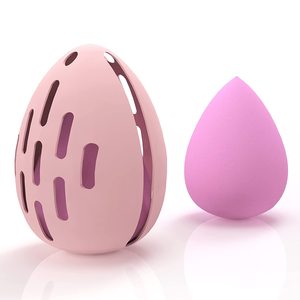
From custom color matching (Pantone exact) and laser-engraved logos to breathable silicone protective cases and drying stands, complete turnkey solutions build elevated brand identity.
Antimicrobial In-Foam Shielding
Infusing non-toxic zinc or silver ions during polyurethane polymerization inhibits 99.8% of bacterial strains (E. coli, S. aureus) that thrive in warm, damp tropical bathroom environments.
Eco-Friendly Bio-Based Foams
Pioneering eco-conscious beauty solutions using plant-based polyols (derived from sugarcane or castor oil), offering 30% reduced carbon footprint without compromising soft foam density.
Rigorous Tensile & Durability Testing
Sponges undergo over 2,000 continuous compression cycles and high-tear stress tests, ensuring consumers experience no surface crumbling or micro-tearing during wash cycles.
3. Localized Application Scenarios in the Indonesian Beauty Market
To capture market share in Southeast Asia's largest consumer hub, brands must align their applicator design with specific local beauty routines and climate constraints:
Scenario A: The "Cushion & Matte Base" Craze in Jakarta & Urban Centers
Indonesian beauty consumers favor a flawless finish that withstands intense midday heat and humidity. Liquid foundations and cushion compacts are heavily formulated with oil-absorbing silica and volatile silicone oils. A custom bevel-cut beauty sponge with a high-density flat edge enables precise press-and-roll application, locking foundation deep into skin texture without heavy layering.
Scenario B: "Baking" & Setting Powder Application for Tropical Sweat Proofing
Under humid weather, loose setting powders often clump when applied with dry fluffy brushes. Indonesian MUAs (Makeup Artists) and everyday consumers utilize damp microfiber-coated beauty sponges to "bake" translucent powder under the eyes and along the T-zone. Sourcing sponges with dual-layer flocking technology delivers high powder pickup and controlled release.
Scenario C: Skincare-Infused Hybrid Makeup Trends
With the rise of sunscreens, skin tints, and serum foundations containing Niacinamide and Hyaluronic Acid, applicators must not strip or contaminate active skincare ingredients. Super-soft, ultra-hydrophilic sponges gentle enough for compromised skin barriers are winning high repurchase rates across Indonesian beauty platforms like Shopee, Tokopedia, and TikTok Shop Indonesia.
4. Institutional Heritage & OEM Expertise: The Anisa International Advantage
Behind world-class beauty tools lies decades of innovation, category expertise, and uncompromising manufacturing ethics. Founded in 1992 by Anisa Telwar Kaicker, Anisa International has established itself as an undisputed pioneer in custom cosmetic applicators, high-performance synthetic fibers, skincare brushes, and specialized beauty tools.
— Anisa Telwar Kaicker, Founder & CEO
Headquartered in Atlanta, Georgia, with dedicated design centers and regional hubs in New York and Los Angeles, Anisa International bridges the gap between visionary brand concepts and mass factory production. By owning and operating vertically integrated manufacturing facilities, Anisa offers beauty brands in Indonesia and globally direct access to:
- End-to-End Prototyping: Rapid 3D physical modeling and formula compatibility testing prior to full tooling investments.
- Proprietary Fiber & Foam Engineering: Decades of continuous R&D creating 100% cruelty-free, vegan synthetic alternatives that outperform animal hair and low-grade foam.
- Audit-Ready Global Supply Chain: Social accountability, fair worker compensation, and environmental sustainability baked into every supply line tier.
5. OEM/ODM Buyer Guide: Step-by-Step Custom Sponge Manufacturing Process
Launching a custom private-label beauty blender line for the Indonesian market requires a structured, multi-phase engineering pipeline:
- Design & Formula Briefing: Technical alignment on target foundation formulas, desired sponge softness (Shore hardness scale), wet expansion ratio, and custom Pantone shades.
- Custom Mold Creation & Sampling: Crafting precision aluminum molds for signature sponge shapes, followed by pilot sample production for laboratory formula testing.
- Microbial & Stress Audits: Testing samples against fungal growth, tear resistance, wash durability, and chemical compatibility with oil-in-water or silicone-in-water emulsions.
- Bulk Production & Custom Packaging: Automated foaming, robotic cutting, laser etching of brand logos, and packaging in breathable eco-friendly blister packs or silicone drying holders.
- Quality Inspection & Export Logistics: Multi-point AQL quality inspection, COA (Certificate of Analysis) issuance, and coordinated freight delivery to Tanjung Priok port (Jakarta) or air cargo hubs.