
Spotlight B2B Catalog: Engineered Applicators
Explore our benchmark private-label powder brushes, facial tools, and specialized applicator configurations designed for global beauty brands and OEM buyers.
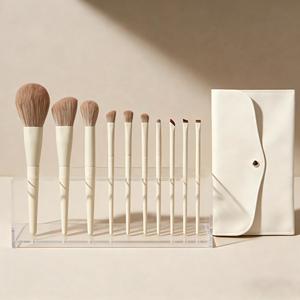
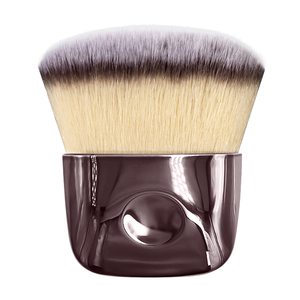
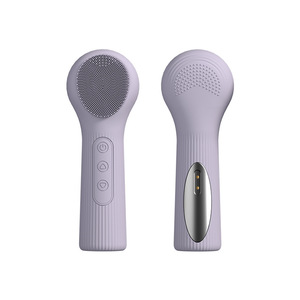
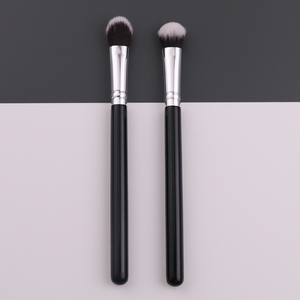
Executive Summary: The 2025 Evolution of Soft Powder Brush Manufacturing
The global beauty tool sector is undergoing a profound structural shift. Sourcing directors, procurement officers, and brand developers no longer evaluate soft powder brushes merely by hand-feel or bristle softness. In 2025, cosmetic applicator procurement is dictated by micron-level synthetic fiber engineering, strict adherence to global compliance standards (FDA, REACH, EU Cosmetic Regulation), and seamless compatibility with complex cosmetic formulations—from hydrophobic micronized silica setting powders to pressed mineral bronzers.
Historically, luxury soft powder brushes relied on natural animal hair (such as blue squirrel or high-grade goat hair) to achieve delicate powder deposit and seamless blending. However, international ethical mandates, regulatory bans, and consumer demand for 100% vegan products have propelled synthetic fiber innovation into a new era. Modern synthetic filaments—engineered via modified Polybutylene Terephthalate (PBT) and Polyethylene Terephthalate (PET) polymers—now surpass natural hair in tensile durability, hygienic anti-microbial performance, and controlled product release.
This B2B sourcing guide and technical whitepaper evaluates the top global soft powder brush manufacturers, dissects essential fiber physics, provides actionable procurement criteria, and outlines future supply chain trends for global brand managers.
Top 10 Soft Powder Brush Factories & Suppliers Landscape (2025 Evaluation)
Selecting the right OEM/ODM factory requires balancing technical innovation, quality assurance scalability, social audit compliance, and turn-key agility. Below is the technical assessment of the industry’s leading suppliers serving global beauty brands.
| Manufacturer / Supplier | Primary HQ & Hubs | Core OEM Technical Specialty | Compliance & Audits | Target Brand Tier |
|---|---|---|---|---|
| Anisa International | Atlanta, US (R&D / Design) + Global Mfg | Patented Fiber Tech, Formula-Matched Applicators, Skincare & Powder Tools | ISO 22716, SA8000, Cruelty-Free Certified | Global Prestige & Luxury Brands |
| Taiki Group | Japan / Vietnam / USA | Engineered Synthetic Fibers (Tafre), Anti-Bacterial Sponge & Powder Brushes | ISO 9001, ISO 14001, GMP | Prestige & Mass Beauty Enterprise |
| Pennellifaro | Italy | Sustainable Fiber Systems, Ergonomic Luxury Italian Craftsmanship | EU Green Deal Compliant, ISO 9001 | Luxury Clean Beauty & Boutique Brands |
| FS Korea | South Korea | Patented Packaging Integration, Precision Powder Brush Molding & Applicators | ISO 22716, CGMP | K-Beauty Global Brands & Innovators |
| Cangzhou Beauty Brush Hub (Tier-1 Cluster) | Hebei, China | High-Volume Tufting, Competitive OEM Bulk Customization, Aluminum Ferrules | ISO 9001, BSCI, FDA Registered | Mass Market, E-Commerce, Private Label |
| Dongguan Cosmetic Tool OEM Manufacturing Cluster | Guangdong, China | Advanced CNC Ferrule Fabrication, Hybrid Sonic & Thermal Facial Cleansers | ISO 22716, SMETA, SA8000 | Global Mid-to-High Tier Direct-to-Consumer |
| Raphaël Make-up Brushes (Max Sauer) | France | Traditional Fine Art Tufting Techniques Applied to High-End Cosmetic Brushes | REACH Compliant, French Heritage Craft | Haute Couture & Heritage Beauty Houses |
| FM Brush Company | USA / Thailand | Precision Component Manufacturing, Specialized Synthetic Hair Formulations | ISO Compliant, US FDA Registered | Professional Artist Brands & Retail OEM |
| Crown Brush | USA / UK / China | Private Label Catalog Solutions, Rapid Prototyping, Turnkey Brush Kits | BSCI, ISO 9001 | Commercial Retail & E-Commerce Brands |
| Hakuho-do Co., Ltd. | Kumano, Japan | Artisanal Hand-Dressed Brush Heads, Ultra-Soft Precision Powder Applicators | Japanese Traditional Craft Standard | Ultra-Luxury & Professional Makeup Artists |
Key Procurement Evaluation Metrics for B2B Buyers
When auditing an OEM factory for soft powder brushes, evaluate these six critical engineering performance dimensions to safeguard your brand reputation.
1. Filament Tensile Strength & Elasticity
High-grade PBT filaments undergo precise thermal stretching during extrusion to achieve high flexural recovery. This prevents powder brushes from splaying or permanently deforming under daily consumer pressure.
2. Micron-Tapered Tip Profile
The softer the touch, the finer the filament tip taper. Premium soft powder brushes require tip tapering down to 0.01mm–0.03mm, mimicking the natural softness of cashmere while maintaining structural body support.
3. Zero-Shedding Glue Binding
Factory tufting must utilize dual-component polyurethane or epoxy resin anchor beds. Pull-force testing must verify that individual bundle shed rates stay well below 0.02% under 5kg vertical tension testing.
4. Ferrule Anodization & Crimp Precision
Seamless aluminum or brass ferrules undergo multi-stage electroplating or anodization to resist corrosion from cosmetic oils and wash solvents. Double-crimping ensures long-term handle stability.
5. Eco-Handle Material Integrity
FSC-certified wood, post-consumer recycled (PCR) resin, or lightweight aluminum handles must endure extreme thermal cycling (+50°C to -20°C) and humidity aging tests without lacquer cracking or swelling.
6. Powder Pickup & Payoff Physics
Micro-grooved synthetic fibers (wave-crimped filaments) create micro-cavities that hold loose translucent or pressed powder particles, releasing them uniformly across the skin without dusting or fallout.
Technical Deep Dive: The Fiber Science Behind Next-Gen Soft Powder Brushes
To provide true Information Gain for professional cosmetic buyers, we must analyze the micro-structural physics of brush hair. Smooth, straight synthetic plastic fibers fail at powder application because they lack the surface scales of natural animal cuticles. Without surface texture, powder particles slip off straight synthetic fibers, causing heavy fallout and poor skin adhesion.
1. Micro-Surfacing & Wave Crimping Technologies
Leading synthetic fiber suppliers utilize chemical etching and mechanical crimping during polymer extrusion. By introducing microscopic wave patterns along the filament length, engineers create deliberate micro-cavities. These cavities trap fine powder granules (typically 5 to 25 microns in diameter) through weak Van der Waals forces and mechanical trapping, releasing them smoothly when swept against skin friction.
2. Comparative Matrix: Animal Hair vs. Standard Synthetic vs. Advanced Wave Synthetic
| Performance Parameter | Traditional Goat / Squirrel Hair | Standard PBT Synthetic (Basic) | Advanced Wave-Etched Synthetic |
|---|---|---|---|
| Cruelty-Free / Vegan Compliance | Non-Compliant (Animal Derived) | 100% Compliant | 100% Compliant (Vegan Certified) |
| Powder Pickup Efficiency | High (Natural Cuticles) | Low-to-Medium (Slippery surface) | Ultra-High (Micro-cavity trapping) |
| Skin Touch Softness | Soft (Variable by grade) | Moderate (Friction at tips) | Ultra-Soft (0.01mm micro-tapered tip) |
| Washing & Cleaning Durability | Degrades over time, porous hair breaks | Durable but may splay | Extreme durability, shape memory recovery |
| Anti-Microbial Resistance | Poor (Porous, harbors bacterial growth) | High (Non-porous polymer) | Superior (Can be silver-ion impregnated) |
| Unit Cost Stability | Volatile, fluctuating market supply | Low / Commodity pricing | Stable, scalable factory pricing |
Factory OEM/ODM Workflow: From Brief to Global Distribution
Partnering with an established manufacturer such as Anisa International or top-tier OEM factories ensures a disciplined 6-stage development lifecycle. Designed specifically for prestige beauty brands, product managers benefit from an end-to-end process that bridges aesthetic creativity with industrial precision.
Formula Alignment & Brief
Matching fiber density and brush head shape directly to your cosmetic formula’s viscosity, binder ratio, and particle size distribution.
3D Industrial Design
Rapid 3D modeling of handle ergonomics, weight distribution, ferrule tapering, and tuft profile customization.
Precision Prototyping
Hand-dressed sample creation, fiber mixture tuning, and laboratory pickup testing with your target powder formula.
Tooling & Compliance Audit
Mold execution, REACH heavy-metal testing, handle lacquer cross-hatch adhesion testing, and toxicological validation.
Automated Mass Tufting
Computerized tufting machines ensuring uniform hair weight per brush (±0.05g consistency) with epoxy potting.
AQL 0.65 Quality Inspection
100% visual checks, pull testing, cleanroom anti-dust packing, and export freight consolidation.
Future Procurement Trends: What Sourcing Directors Must Plan For (2025–2030)
As consumer standards evolve and global sustainability regulations tighten, cosmetic brush procurement strategies are shifting toward three macro-trends:
1. Closed-Loop Circular Materials (PCR & Bio-Based Fibers)
Leading European and North American beauty brands are mandating minimum thresholds of Post-Consumer Recycled (PCR) aluminum for ferrules (minimum 30% to 100% PCR) and bio-based plant oil resins (derived from castor bean oil) for synthetic filaments. Factories without GRS (Global Recycled Standard) traceability will face increasing vendor phase-outs.
2. Hybrid Skincare-Beauty Convergence
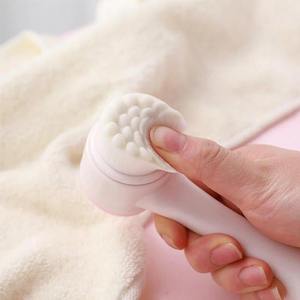
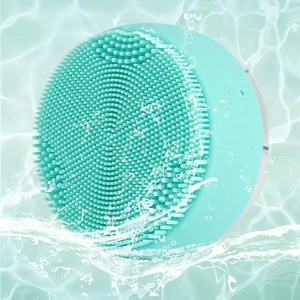
Powder application is no longer isolated from skincare. As seen in recent factory innovations, multi-functional tools—combining micro-soft synthetic bristles with thermal-sensing silicone, electric sonic micro-vibrations, or cooling alloy massagers—are seeing rapid market adoption. Brands launching hybrid products capture higher average order values (AOV) and retail price points.
3. Anti-Microbial & Hygiene-Conscious Treatments
In a post-pandemic retail environment, consumers clean their brushes less frequently than recommended. Forward-thinking suppliers integrate silver-ion (Ag+) antimicrobial agents directly into the PBT fiber polymer matrix during extrusion. This permanently inhibits 99.9% of bacterial colonization (including S. aureus and E. coli) across the brush lifespan without washing away.
Frequently Asked Procurement Questions (FAQ)
Technical and commercial answers for sourcing managers, product developers, and supply chain leads.
What is the standard Minimum Order Quantity (MOQ) for custom private label soft powder brushes?
Standard OEM/ODM production MOQs for custom soft powder brushes range from 1,000 to 3,000 units per style for custom color handle spraying and logo printing. For fully custom molded handles or proprietary synthetic fiber extrusion blends, factory MOQs typically start at 5,000 to 10,000 units depending on component tooling requirements.
How do factories test and prevent brush bristle shedding during bulk manufacturing?
Professional brush factories utilize a 3-part shedding prevention protocol: (1) Computer-controlled automated tufting to ensure precise hair density; (2) High-viscosity two-part epoxy resin potting deep within the ferrule; and (3) Vertical tension pull-force testing (typically applying 3kg to 5kg force for 10 seconds). Acceptable defect shedding thresholds must remain below 0.02% under AQL 0.65 standards.
What is the difference between PBT and PET synthetic fibers for powder brushes?
Polybutylene Terephthalate (PBT) is the gold standard for soft cosmetic brushes because it offers superior flexural elasticity, softer tip tapering capability, and higher resistance to solvents compared to Polyethylene Terephthalate (PET). PET is stiffer and more economical, making it ideal for structural support in the core of large powder brushes, while outer contact bristles utilize fine-micron PBT.
What international regulatory certifications should a qualified brush factory possess?
Tier-1 cosmetic applicator factories should maintain: ISO 22716 / CGMP (Good Manufacturing Practices), ISO 9001 (Quality Management), SA8000 / BSCI (Social Accountability Audits), and FSC Certification (Forest Stewardship Council for wood handles). Additionally, all materials must comply with EU REACH Annex XVII, California Proposition 65, and US FDA food-contact safety standards for plastics.
How long does the sampling and mass production lead time take for OEM orders?
Counter-sampling typically takes 7 to 14 business days for standard catalog styles, or 21 to 30 days if custom 3D handle tooling is required. Once pre-production samples (PPS) are approved in writing, mass manufacturing lead times generally range from 35 to 50 days, depending on order volume and custom packaging requirements.
Can synthetic soft powder brushes perform effectively with baked or pressed mineral formulas?
Yes. By specifying high-density wave-crimped filaments with micro-etched surface textures, engineered synthetic brushes achieve equivalent or superior powder pickup compared to goat hair. The micro-crimping creates tiny ridges that scrape pressed baked powders cleanly without hard-panning the cosmetic pan.
Ready to Elevate Your Cosmetic Tool Portfolio?
Partner with an industry-leading OEM/ODM cosmetic brush manufacturer. Request our comprehensive 2025 product catalog, sample kit, or custom private-label price quotation today.
Get Catalog