
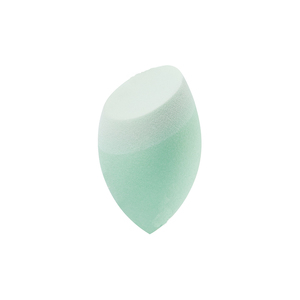
Direct Factory Catalog
OEM / Private Label Skincare Applicators
Formula-matched brushes and ergonomic facial tools manufactured under zero-defect quality control
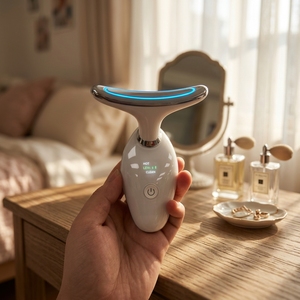
Private Label Neck Wrinkle Removal & EMS Facial Massager
Contact Us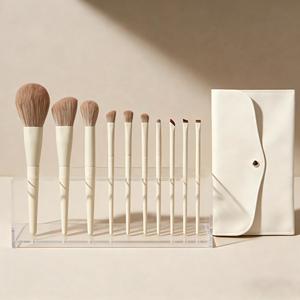
Professional 12-Piece Dense Vegan Synthetic Brush Set
Contact Us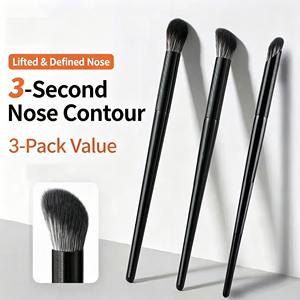
Angled Precision Finger Contour & Highlight Brush
Contact Us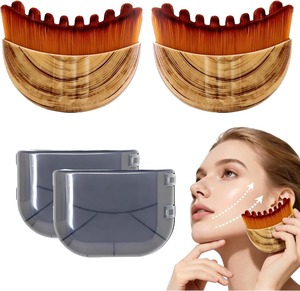
OEM Double-Sided Clay Mask & Cleansing Wooden Brush
Contact Us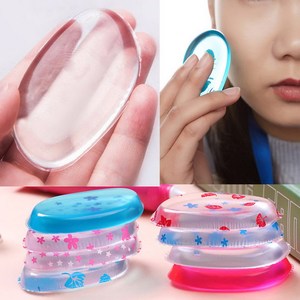
Hygienic Medical-Grade Silicone Skincare Applicator
Contact Us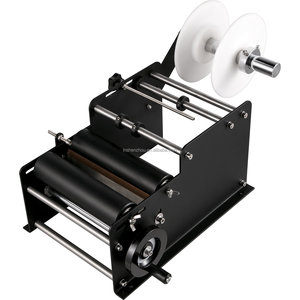
Cosmetic Packaging Labeling & Production Applicator
Contact Us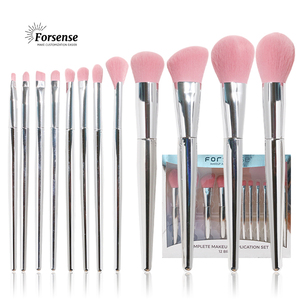
Silver Metallic Angled Fan & Clay Mask Applicator
Contact Us
Executive Industry Insight
The Global Sourcing Landscape for Clay Mask Brushes
How leading cosmetic brands optimize supply chain performance, material safety, and formula payoff
30+
Years Manufacturing Leadership
100%
Cruelty-Free Synthetic Fiber
0.02%
Defect Rate (ISO Certified)
65+
Global Brand Partners
Information Gain Insight: The shift toward active-heavy formulations (such as kaolin, bentonite, charcoal, and AHA/BHA clay blends) has fundamentally altered applicator specifications. Modern skincare buyers require non-porous, chemical-resistant, and micro-spatula bristles or food-grade silicone heads that prevent formula absorption, reduce product waste by up to 32%, and eliminate cross-contamination during facial treatments.
Supplier Evaluation Framework
Comparative Benchmarks: Top 10 Clay Mask Brush Manufacturers
Data-driven audit parameters for procurement managers evaluating OEM, ODM, and Private Label suppliers
| Evaluation Criteria | Tier 1 Global OEM (e.g., Anisa Benchmarks) | Mid-Tier Contract Manufacturers | Low-Cost Commodity Suppliers |
|---|---|---|---|
| Fiber Filament IP & Softness | Custom-engineered PBT/PET synthetic fibers & food-grade silicone | Standard off-the-shelf nylon or basic silicone | Low-grade PVC/Nylon susceptible to shedding |
| Formula Compatibility | Tested for acidic/alkaline muds, oils, micro-exfoliants | Basic fluid compatibility | High risk of chemical swelling or glue dissolution |
| Ferrule & Handle Bonding | Double-crimped anodized aluminum / eco-resin epoxy | Single-crimp aluminum ferrules | Staple-bound or weak glue joints causing detachment |
| Compliance & Audits | ISO 9001, ISO 14001, SA8000, REACH, FDA, EU cosmetics standard | Regional ISO certification | Minimal or self-declared compliance |
| Customization Depth | 3D Prototyping, ergonomic sculpting, laser logo engraving | Standard handle silk-screening | Stock items only with high minimum orders |
Material Science
Engineering the Ultimate Clay Mask Applicator
Understanding mechanical shear, bristle density, and hygienic barrier performance
Flex-Silicone Spatula Tip
Engineered for high-viscosity detoxifying clay and mud formulas. Non-porous surfaces allow effortless gliding, seamless cleanup, and complete product transfer without clogging bristle bases.
Precision Tapered Synthetic Filaments
Micro-textured synthetic hair crafted for exfoliating masks containing active acids or botanical scrubbing particles. Delivers uniform film thickness while cushioning skin tissue.
Anti-Microbial Shield & Waterproofing
Integrated silver-ion technology prevents bacterial growth within dense ferrule chambers, ensuring compliance with strict global cosmetic safety and sanitation mandates.
Strategic Procurement
Future Sourcing & Manufacturing Trends
Key market drivers transforming the OEM beauty tool and applicator export ecosystem
1. Closed-Loop Circular Materials
Leading global exporters are transitioning from virgin plastics to PCR (Post-Consumer Recycled) resin handles, ocean-bound plastic ferrules, and FSC-certified bamboo stems to meet ESG reporting standards.
2. Multi-Functional Hybrid Tools
Consumer preference has shifted toward dual-ended applicators—combining a plush synthetic brush on one end for gentle application and a textured silicone scrubber on the other for pore-cleansing and mask removal.
3. Automated Micro-Tufting Precision
Top-tier factories utilize robotic tufting and computerized weight-scaling to guarantee uniform hair distribution, eliminate shedding, and ensure identical feel across high-volume production batches.
Factory Excellence
Why Tier-1 Beauty Brands Partner With Leading Exporters
Combining design thinking, rigorous quality engineering, and responsible global manufacturing
Formula-First Engineering
We analyze the viscosity, surface tension, and chemical formulation of your specific clay mask or treatment to engineer an applicator head tailored for smooth, hygienic deposition.
Proprietary Synthetic Fibers
Decades of continuous research have yielded 100% cruelty-free, animal-free fibers that replicate natural hair performance while offering superior durability and hygienic rinseability.
Audit-Ready Global Supply Chain
Equipped with U.S.-based design and management hubs in Atlanta, New York, and Los Angeles, alongside certified manufacturing facilities, we deliver frictionless international distribution.
Accelerate Your Skincare Applicator Line Development
Partner with an industry leader to create customized, formula-matched clay mask brushes that elevate your brand's consumer experience.
Contact Us
Sourcing Insights
Clay Mask Brush Procurement FAQ
Addressing essential technical, production, and quality assurance questions for beauty brand buyers
What are the primary structural differences between silicone and synthetic bristle clay mask brushes?
Silicone clay mask brushes feature a flat, flexible, non-porous head made of medical or food-grade silicone. They are optimal for thick muds, charcoal pastes, and gel masks because they do not absorb liquid, clean instantaneously with warm water, and deliver 100% product transfer to the skin. Synthetic bristle brushes utilize micro-tapered PBT or nylon filaments. They excel at spreading lighter, emulsion-based, or enzymatic clay formulations evenly into contours around the nose and eye orbital areas. Top brands frequently source both or request dual-ended combination tools.
How do top factories ensure bristle retention and prevent shedding in clay mask brushes?
Premium OEM factories utilize multi-stage head assembly. First, filaments are bound with waterproof epoxy resins formulated to withstand cosmetic solvent exposure. Second, the bristle bundle is double-crimped inside a heavy-gauge anodized aluminum or brass ferrule under high pneumatic pressure. Third, automated pull-testing guarantees that bristle tufts resist tension force significantly higher than standard daily washing routines demand.
What compliance certifications are essential when importing skincare brushes into North America and the EU?
For compliant importation, factories must provide REACH testing (verifying freedom from SVHCs and harmful phthalates), FDA food-contact compliance for silicone parts, and California Proposition 65 safety verification. Additionally, facility-level audits such as ISO 9001 (Quality Management), ISO 14001 (Environmental Management), and SMETA/SA8000 (Social Accountability) ensure that your brand remains protected from regulatory sanctions and supply chain reputational risks.
Can clay mask brush handles be customized with eco-friendly or sustainable materials?
Yes. Leading exporters offer diverse sustainable material pathways, including FSC-certified sustainable wood, bamboo, Post-Consumer Recycled (PCR) ABS/PET plastic resin, and bio-based plant fiber composite materials. Custom finishing options include eco-water-based lacquers, laser-etched brand logos, and soft-touch matte coatings.
What is the typical Minimum Order Quantity (MOQ) and production lead time for OEM projects?
Standard custom OEM manufacturing runs generally start at 3,000 to 5,000 units per style for bespoke colors or custom mold dimensions. Private-label orders utilizing existing mold shapes with custom logo printing can start at lower quantities. Design prototyping typically takes 7–14 days, pre-production sampling requires 15–20 days, and full mass production ranges from 35 to 45 days after final sample lock-off.
How does factory tooling customization work for custom applicator shapes?
The customization process begins with 3D CAD modeling and rapid prototyping (typically via stereolithography 3D printing). Once initial ergonomics and formula application performance are validated, hard steel molds are CNC-machined for the silicone head or handle components. This ensures millimeter-level precision across millions of produced units.
Direct Supplier Inquiry
Ready to Elevate Your Skincare Brush Portfolio?
Consult directly with our engineering and sourcing experts to receive custom product samples, factory specification sheets, and competitive B2B volume quotes.
Contact Us