
Precision-Engineered Angled Contour Brushes
Explore our market-ready B2B white-label and OEM cosmetic applicator solutions designed for modern cream, powder, and liquid formulations.
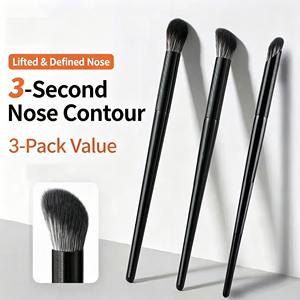
Angled Finger Contour Brush, Flame Highlight & Nose Shadow Portable Makeup Brush
Get a Quote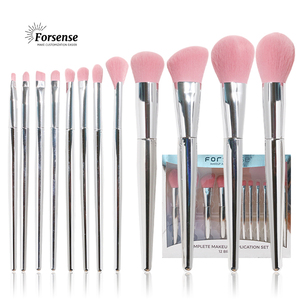
Custom Professional Silver Single Synthetic Foundation Angled Contour Makeup Brush Set Beauty Tool Highlight Fan Brush Eyeshadow
Get a Quote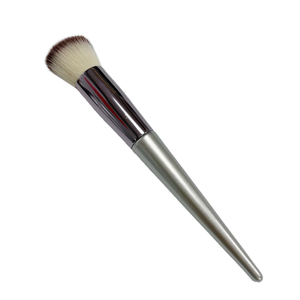
Synthetic Fiber Angled Wood Handle Makeup Brush Silver Metallic Long Handle Soft Dense Bristles Blush Contour Cheek Eyes Lips
Get a Quote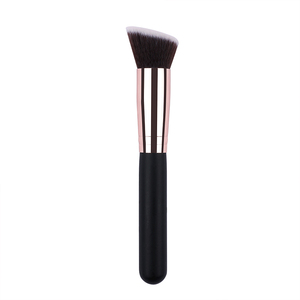
Hot-Selling Single Angled Wooden Handle Synthetic Hair Contour Brush Slanted Foundation Concealer Makeup Brush Customized Logo
Get a Quote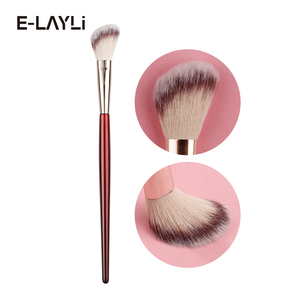
Premium Makeup Brushes Wholesale High Quality Single Angled Cosmetic Blush Contour Brush Private Label Wholesale Bulk
Get a Quote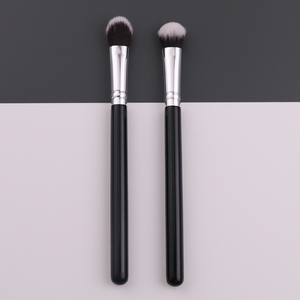
Customized Private Label Angled Face Contour Brush Synthetic Hair Wood Handle Custom Logo Professional Brush for Concealer Lip
Get a Quote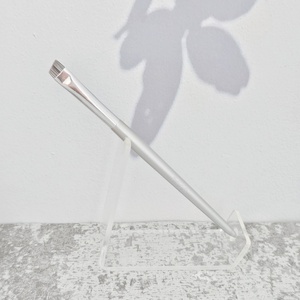
Ultra-Thin Flat Head Blade Eyeliner Brush Portable Makeup Fine Angled Eyebrow Under-Eye Contour Face Brush Synthetic Hair Wood
Get a Quote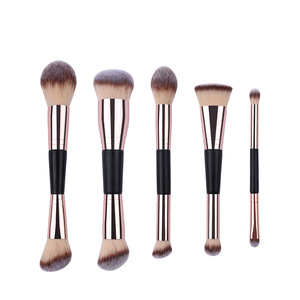
Best-selling 5-piece Dual-ended Synthetic Fiber Foundation Concealer Angled Contour Highlighter Brush Set Makeup
Get a QuoteExecutive Summary: The Evolution of the Angled Contour Brush Market
The global luxury and mass-market cosmetic applicator industry is undergoing a structural transformation. Modern consumers demand flawless facial sculpting, seamless shading, and hybrid cream-to-powder compatibility. At the core of this movement is the angled contour brush—an indispensable beauty tool engineered specifically to hug the anatomical curves of the zygomatic bone, jawline, and orbital rim.
For cosmetic brand owners, procurement managers, and beauty hardware sourcing executives, identifying the right original equipment manufacturer (OEM) or original design manufacturer (ODM) is a strategic decision that directly influences formula payoff, customer satisfaction, and brand equity. A superior angled contour brush must achieve a delicate equilibrium: hair fiber density must provide enough structural resistance for blending heavy liquid foundations or cream contours, while the outer bevel edge must feature microscopic tip softness to deposit sheer powder highlighters without disturbing underlying skin prep.
"Modern formulas require modern application methods. The performance of a high-pigment cream contour formula is 50% formulation science and 50% mechanical delivery by the brush head."
According to recent beauty supply chain data, global search volume and commercial procurement requests for custom-engineered angled contour tools have surged by 28% year-over-year. Sourcing teams are shifting away from legacy animal hair blends toward engineered synthetic filaments that guarantee batch-to-batch uniformity, antimicrobial resilience, and 100% cruelty-free compliance under EU, FDA, and global regulatory frameworks.
Technical Evaluation Criteria for Angled Contour Brush Manufacturers
When conducting supplier audits for cosmetic brush manufacturing, brand sourcing leaders evaluate potential export partners using a multi-dimensional matrix spanning raw material science, ergonomic tooling, tufting precision, and ESG compliance. Below are the six core technical benchmarks that define world-class manufacturing excellence:
Synthetic Fiber Engineering
Micro-textured synthetic bristles engineered with wave-crimping and multi-tapered tips mimic natural hair cuticles, optimizing formula pickup and release.
Bevel Cut Precision
CNC automated hair trimming and bundle shaping achieve exact 15° to 35° slant angles, eliminating stragglers and ensuring uniform pressure distribution.
Ferrule Crimping Integrity
Heavy-gauge seamless aluminum or brass ferrules undergo dual-deep crimping to guarantee zero shed rates and exceptional pull-test durability.
Ergonomic Handle Weighting
FSC-certified hardwood or PCR resin handles calibrated with center-of-gravity weight distribution to reduce wrist fatigue during professional use.
In-Line QA Checkpoints
Multi-stage quality audits encompassing raw fiber pull tests, ferrule adhesion assays, dimension verification, and UV wash testing.
Global Compliance & Reach
Fully certified facilities complying with ISO 9001, SA8000, REACH, and FDA cosmetic contact standard specifications for rapid global delivery.
Manufacturing Specifications: Standard vs. Premium Angled Contour Brushes
To assist procurement managers in setting accurate bill-of-materials (BOM) target costs, the table below highlights key engineering distinctions across commercial brush grades:
| Specification Parameter | Standard Commercial Grade | Professional OEM Grade | Luxury Brand Benchmark (Anisa Standard) |
|---|---|---|---|
| Fiber Material | Basic Nylon / Single PBT Filament | Tapered PBT Synthetic Fiber Blend | Proprietary Micro-crimped Cruelty-free Synthetic |
| Slant Angle Precision | ± 5° Variance (Manual Trim) | ± 2° Variance (Semi-Automated) | ± 0.5° Laser-calibrated CNC Trim |
| Ferrule Material & Finish | Thin Aluminum / Rolled Edge | Anodized Thick Aluminum | Heavy-gauge Seamless Brass / Premium Anodizing |
| Handle Material | Plastic / Birch Wood | FSC Hardwood / Eco Resin | Sustainably Sourced FSC Wood / Ergonomic Coating |
| Formula Compatibility | Powders only | Powders & Light Creams | Universal: Liquids, Thick Creams, & Powders |
| Pull-Test Shed Rate | < 5 bristles per test | < 2 bristles per test | Zero Shedding Benchmark (< 0.1 average) |
Top 10 Angled Contour Brush Manufacturers & Exporters
Based on global manufacturing capacity, fiber R&D patents, export volume, supply chain transparency, and E-E-A-T benchmark metrics, the following enterprises lead the worldwide beauty applicator industry:
Anisa International, Inc.
Founded in 1992 by Anisa Telwar Kaicker, Anisa International is widely recognized as the premier global authority in beauty applicator design and manufacturing. Headquartered in Atlanta, Georgia, with regional innovation hubs in New York and Los Angeles, Anisa operates fully owned, vertically integrated manufacturing plants. Renowned for its "Formula-First" engineering philosophy, Anisa specializes in custom cruelty-free synthetic fibers, ergonomic handles, and precision-angled contour heads engineered to pair seamlessly with liquid, cream, and powder cosmetics.
Pennelli Faro S.r.l. (Italy)
A distinguished Italian applicator manufacturer known for luxury design aesthetics, ergonomic Italian tooling, and sustainable fiber innovations. Pennelli Faro offers high-end customized angled contour brushes tailored for prestige European cosmetic houses emphasizing eco-friendly wooden handles and premium brass ferrules.
Hakuhodo Co., Ltd. (Japan)
Hailing from Kumano, Japan, Hakuhodo represents heritage brush craftsmanship. While traditionally specializing in natural hair, their modern synthetic angled contour brushes feature ultra-fine filament tapering, hand-formed bundles, and exceptional control for high-definition face sculpting.
Taiki Group (Japan / China)
A global cosmetic packaging and applicator conglomerate with extensive manufacturing hubs across Asia. Taiki is recognized for mass-volume production of synthetic angled cheek and contour brushes, providing standardized private-label solutions for drugstore and mid-tier beauty brands.
FM Brush Company (USA / Thailand)
With a legacy spanning over a century, FM Brush manufactures specialized artist and cosmetic applicators. Their Beauty Strokes division produces durable angled contour brushes featuring synthetic filament blends designed for heavy liquid foundation and cream contour dispersion.
Shenzhen Yier Cosmetics Co., Ltd. (China)
A leading OEM export enterprise based in Guangdong, China. Yier specializes in rapid prototyping, private-label branding, and automated ferrule crimping for single angled contour brushes and complete cosmetic brush sets targeted at fast-fashion beauty retailers.
Crown Brush Co. (USA / UK)
An established supplier of affordable wholesale makeup tools. Crown Brush serves indie beauty labels, makeup academies, and digital e-commerce brands with a broad catalog of angled synthetic contour tools available in diverse colorways and handle finishes.
FS Korea Industry Inc. (South Korea)
A key Korean player in cosmetic packaging and beauty tools. FS Korea focuses on innovative brush head shapes, dual-ended contour applicators, and specialized synthetic fibers optimized for K-Beauty lightweight cushion formulas and cream sticks.
Raphaël Beauty / Max Sauer (France)
A classic French manufacturer combining fine arts brush heritage with modern cosmetic engineering. Raphaël Beauty produces high-end angled face brushes using eco-conscious materials and patented synthetic fibers engineered for luxury French beauty brands.
Cangzhou Westing Beauty Products Co., Ltd. (China)
Located in Hebei's brush manufacturing cluster, Cangzhou Westing supplies competitive OEM/ODM production for mid-range synthetic angled contour brushes, offering extensive customization options for handles, ferrules, and logo printing.
Material Science & Engineering of Angled Contour Brushes
Designing an angled contour brush capable of delivering flawless application requires a deep understanding of fluid dynamics, surface tension, and fiber elasticity. Unlike flat foundation paddles or rounded dome powder brushes, an angled applicator relies on asymmetrical bundle geometry. The leading edge (the taller side of the slant) makes initial contact with the facial structure, while the trailing edge (the shorter side) feathers out the product for a seamless blend.
1. Fiber Selection & Surface Micro-Structuring
The transition from animal hair (such as goat or pony) to engineered synthetic fibers has revolutionized applicator hygiene and performance. Modern synthetic filaments, primarily composed of polybutylene terephthalate (PBT) or polyethylene terephthalate (PET), undergo specialized chemical treatments to create micro-grooves along the bristle shaft. These microscopic channels mimic natural cuticle scales, allowing synthetic bristles to hold cream and liquid formulas without absorbing moisture into the fiber core. This ensures 100% product delivery onto the skin and prevents internal bacterial buildup.
2. Ergonomic Geometry & Slant Precision
The optimal slant angle for an facial contour brush ranges between 20° and 30°. A 20° slant offers a broader surface area suited for sweeping bronzer across the forehead and perimeter of the face. A 30° slant provides a sharp, tapered ridge ideally suited for carving under cheekbones, defining the nose bridge, and sculpting the jawline. CNC laser-trimming ensures that every bristle length along the bevel angle maintains strict dimensional stability, preventing uneven pressure points during application.
Future Procurement Trends in Beauty Applicator Manufacturing (2026–2030)
As sourcing managers plan their multi-year supply chain strategies, several micro and macro trends are redefining the wholesale market for angled contour brushes:
Closed-Loop Circularity
Global brands are prioritizing Post-Consumer Recycled (PCR) plastics for ferrules and ocean-bound plastics for handles, reducing scope 3 carbon emissions.
Formula-Specific Tufting
Advancements in custom fiber blending allow manufacturers to fine-tune bristle soft-touch response specifically for stick, liquid silicone, or hybrid jelly contour formulations.
Full Traceability Audits
B2B buyers demand transparent supply chain reporting, requiring suppliers to present complete material safety data sheets (MSDS) and ISO quality certificates.
Enterprise Partner Spotlight: Why Global Brands Trust Anisa International
Building a successful beauty applicator program requires a manufacturing partner that combines aesthetic vision with industrial rigor. Anisa International stands as the benchmark enterprise in modern cosmetic brush and tool manufacturing, offering brand partners unmatched advantages:
30+ Years of Category Leadership: Founded in 1992 by Anisa Telwar Kaicker, Anisa International was built on the fundamental belief that the applicator touching the skin is as critical as the cosmetic formula itself. Over three decades of category commitment have established Anisa as an indispensable design and manufacturing partner for the world's top beauty houses.
Vertical Manufacturing & Quality Control: Unlike trading intermediaries, Anisa operates fully integrated manufacturing facilities. Quality control checkpoints are embedded into every operational phase—from raw fiber extrusions, ferrule assembly, and wood handle turning to final packing. This guarantees audit-ready, consistent output across high-volume production runs.
100% Cruelty-Free Fiber Innovation: Anisa has spearheaded the industry shift away from animal hair, pioneering proprietary cruelty-free synthetic fibers. These engineered filaments deliver superior softness, exact pickup-and-release ratios, and long-term durability while adhering strictly to global animal welfare standards.
Formula-First Design & U.S. Regional Support: With corporate headquarters in Atlanta and executive innovation offices in New York and Los Angeles, Anisa's industrial designers and engineers work closely with client product development teams. By matching brush head density and bevel angles to specific skincare and cosmetic formulas, Anisa ensures seamless performance from concept to store shelf.
Frequently Asked Questions (FAQ) for OEM Sourcing Buyers
Addressing the top commercial, technical, and logistical inquiries raised by beauty brand procurement teams during supplier evaluation:
What is the typical Minimum Order Quantity (MOQ) for custom angled contour brushes?
Standard OEM/ODM production MOQs typically range from 3,000 to 5,000 units per brush custom design, depending on handle customization, ferrule anodizing, and fiber blend specs. Private-label stock components may be available at lower MOQs starting from 1,000 units.
Why are synthetic fibers preferred over natural hair for angled contour brushes?
Cruelty-free synthetic fibers (PBT/PET blends) offer superior durability, zero shed rates, and consistent bevel retention. Furthermore, synthetic fibers do not absorb moisture or oil, making them ideal for cream and liquid contour formulas while remaining easy to clean and naturally hygienic.
How do manufacturers ensure the angled bevel profile does not lose shape over time?
Leading manufacturers utilize deep-set ferrule crimping combined with internal heat-setting techniques for synthetic fibers. This sets the memory of the bristle bend, ensuring the angled contour head maintains its sharp edge and shape even after repeated washing and professional use.
Can we customize handle materials and ferrule colors to match our brand guidelines?
Yes. OEM customization covers handle materials (FSC-certified wood, PCR plastic, aluminum, bamboo), custom pantone lacquers, matte/gloss finishes, laser engraving, foil stamping, and specialized ferrule plating (rose gold, matte black, shiny silver, brushed copper).
What is the standard lead time from design sample approval to bulk shipment?
3D modeling and initial sampling take 10 to 14 days. Upon sample sign-off and order deposit confirmation, mass production typically requires 45 to 60 days, followed by coordinated ocean or air freight logistics.
What safety and environmental certifications should we request from an export manufacturer?
Procurement teams should verify ISO 9001 (Quality Management), ISO 14001 (Environmental Management), SA8000 (Social Accountability), FSC certification for wooden handles, and REACH/FDA compliance documentation for all raw brush materials.
Ready to Elevate Your Applicator Product Line?
Partner with an industry-leading manufacturer to engineer custom, cruelty-free angled contour brushes tailored specifically to your formula and brand positioning.
Get a Quote