0%

Eye care routines often rely on small tools: a soft-tip applicator for serum, a flocked wand for a cooling gel, or a compact brush for precise placement. These products look simple. Their performance depends on details, including tip shape, material consistency, handle balance, and packaging that keeps the applicator clean. For brands sourcing in China, choosing a manufacturer means looking beyond attractive product photos.

This guide introduces ten China-based manufacturers associated with Eye Care Applicator Tools and explains what buyers may want to assess. Useful checks include production capabilities, material specifications, sample quality, customization options, and documented quality-control procedures. Ask how tip dimensions are monitored and whether batches are inspected for loose fibers, rough edges, or uneven coating. A steady answer matters. So does a sample in hand.

The list is intended as a practical starting point, not a guarantee of performance or a formal ranking. Capabilities can change, and a supplier’s best-fit product may not match every formula, user group, or packaging line. Buyers should verify current specifications directly and test compatibility under their own conditions. No shortlist is perfect. That is worth remembering. Careful comparison, clear requirements, and independent checks can help turn an initial search into a more reliable sourcing decision.
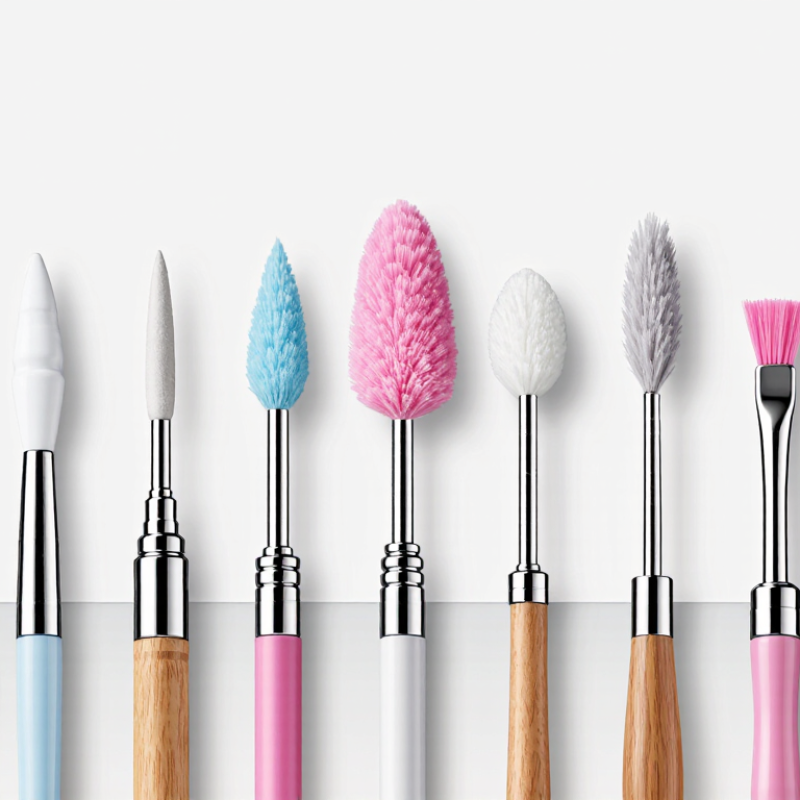
China Top 10 Eye Care Applicator Tools Manufacturers

Eye Care Applicator Tools: Types, Uses, and Product Scope

Eye care applicator tools include silicone tips, flocked swabs, soft brushes, and metal or ceramic rollers. Each design serves a different purpose. A flexible silicone tip can spread a small amount of gel along the under-eye area, while a flocked applicator holds liquid formulas for controlled placement. Rollers add a cool, gliding sensation. Small details matter.

Product scope extends from single-use sample applicators to reusable tools supplied with eye creams, serums, or masks. The applicator should match the formula’s thickness and intended use. A wide tip may suit a balm, but feel awkward near the inner corner. A narrow tip offers precision, though it may dispense too little. There is no universal best shape.

For manufacturers, useful evaluation includes tip softness, edge smoothness, dose consistency, and how securely the head joins the handle. Materials should resist the product they contact and remain easy to clean when reuse is intended. Packaging also matters: a cap can protect the tip during storage. In practice, user comfort varies, so prototypes should be tested with different hand sizes and application habits. One design flaw is easy to miss on a drawing.

China’s Eye Care Applicator Tool Manufacturing Landscape

China Top 10 Eye Care Applicator Tools Manufacturers

China’s Eye Care Applicator Tool Manufacturing Landscape

China’s eye care applicator manufacturing landscape spans molded plastic tools, soft-tip applicators, and small precision components. Some factories focus on high-volume production, while others handle custom shapes, surface finishes, or packaging. Production may involve mold design, material selection, assembly, and inspection. The details matter. A smooth edge and a well-fitted cap can affect handling and product protection.

Reliable sourcing depends on clear specifications, not polished catalog images alone. Buyers can ask about material documentation, batch identification, dimensional checks, and inspection procedures. For eye-area use, contact surfaces should be evaluated for smoothness and consistency. Samples also help reveal details that drawings can miss, such as grip comfort or how evenly a tip applies product. Supplier capabilities vary, and comparisons are not always straightforward; that part takes patience.

Tips: Request samples from more than one production run. Check tip softness, edge finish, and cap fit. Ask how defects are recorded and handled. Keep evaluation notes. Small differences can matter.

Criteria for Evaluating and Ranking Manufacturers

A credible ranking of Chinese eye care applicator tool manufacturers should begin with evidence, not catalogue claims. McKinsey’s 2023 beauty-market report estimated global beauty sales at about $430 billion in 2022, with roughly 6% annual growth projected through 2027. That growth raises expectations for consistent production, but market size alone says little about an individual supplier. A useful scorecard could assign 30% to material traceability and safety records, 25% to process control, 20% to usability, 15% to delivery reliability, and 10% to technical support.

Auditors should inspect real production details: tip dimensions, surface finish, fiber shedding, and applicator-to-handle fit. Request batch records, incoming-material checks, and test results for repeated use and packaging integrity. ISO 22716 provides cosmetics good manufacturing practice guidance; it can inform factory reviews, though it does not certify every tool’s performance. Small details matter. A tip that feels smooth on a sample may vary after thousands of units, so buyers should compare multiple lots rather than one polished prototype.

Usability trials should involve different hand sizes and application routines, with feedback recorded against a consistent checklist. This approach still has a blind spot: comfort is partly subjective, and a neat spreadsheet cannot capture every user’s experience. Rankings should therefore disclose their weighting, sample size, and evidence date. Without those details, a high score may look precise while resting on thin evidence.

China Top 10 Eye Care Applicator Tools Manufacturers — Criteria for Evaluating and Ranking Manufacturers

This is a weighted evaluation framework for comparing manufacturers of eye-care and cosmetic applicator tools. It does not represent verified company rankings or audited supplier scores. Apply the same scoring method to each candidate and confirm claims with current documentation and factory-level checks.

Rank Evaluation Criterion Weight What to Evaluate Evidence to Request
1 Regulatory and Quality-System Readiness 16% Whether the manufacturer maintains a documented quality system and can identify the regulatory requirements applicable to the product and destination market. ISO 13485 is relevant when the product and its intended use fall within the scope of a medical-device quality system; it is not a universal requirement for cosmetic applicators. Current certificates with scope and issuing body; quality manual or procedures; product classification rationale; records of corrective and preventive actions.
2 Product Safety and Intended-Use Controls 14% Controls for products used near the eyes, including design risk review, safe edges and surfaces, secure assembly, appropriate warnings, and safeguards against foreseeable misuse. Risk assessment; design specifications; inspection criteria; labeling and instructions; documented review of intended use and target markets.
3 Materials and Supplier Traceability 12% Ability to identify material grades and suppliers for components such as polymer bodies, metal parts, elastomers, brushes, and packaging, and to control changes to those materials. Material specifications; supplier declarations or test reports where applicable; incoming-inspection records; lot or batch traceability; change-control records.
4 Manufacturing Process Control 12% Defined, repeatable production processes for molding, machining, assembly, finishing, and packaging, with controls suited to the product design and materials. Process flow; work instructions; equipment maintenance and calibration records; in-process inspection records; documented process-change approvals.
5 Inspection, Testing, and Defect Management 11% Inspection plans covering relevant dimensions, appearance, fit, function, and assembly integrity, plus a documented method for handling nonconforming products. Inspection plans and sampling rationale; test methods and results; defect and rejection records; corrective-action examples; final-release records.
6 Design and Customization Capability 10% Capability to develop or adapt applicator shapes, tip geometry, handle design, materials, colors, and packaging while maintaining controlled specifications. Development workflow; drawings or specifications; prototype and approval records; design-change history; ownership and confidentiality terms.
7 Product Validation and Test Planning 9% Use of tests appropriate to the product’s intended use, design, and market requirements. Testing should be selected based on risk and applicable standards rather than assumed to be identical for every applicator. Validation plan and reports; test-method references; laboratory details where external testing is used; evidence linking results to the production design.
8 Production Capacity and Delivery Reliability 7% Ability to meet agreed order volumes, production schedules, packaging requirements, and replenishment plans without relying on unverified capacity claims. Capacity plan; recent on-time delivery records; production scheduling process; contingency plan; sample purchase-order performance data.
9 Export and Documentation Capability 5% Ability to prepare accurate commercial, shipping, product, and market-specific documentation for the buyer’s destination and distribution model. Redacted examples of export documents; product specifications; packaging and labeling files; documented experience with the relevant destination markets.
10 Environmental and Responsible-Sourcing Practices 4% Documented practices for material use, waste handling, packaging choices, and supplier oversight, assessed against the buyer’s requirements and applicable local rules. Environmental procedures or certifications, if held; waste-management records; packaging material declarations; supplier code or sourcing controls.
Total Weight 100% Use the same evidence requirements and scoring rules for every manufacturer being compared.

Profiles of 10 Chinese Eye Care Applicator Tool Manufacturers

Without verified company records, these ten profiles describe supplier capabilities, not confirmed individual businesses. Profile one focuses on molded-plastic applicators, where smooth edges and consistent tip shapes matter. Profile two specializes in silicone heads for gentle, repeatable contact. Profile three pairs applicator production with compact packaging assembly. Profile four may offer customized handles, but buyers should check mold ownership and revision costs.

Profile five serves small-batch orders, useful for testing grip and tip size before scaling. Profile six emphasizes automated assembly; ask how it checks alignment and loose components. Profile seven works with soft elastomers suited to flexible applicator heads. Profile eight may provide several material options, though test reports should support each specification. Details vary. A sample can reveal more than a catalogue.

Profile nine focuses on export-ready packaging and production documentation. Confirm that batch records match the delivered goods. Profile ten offers integrated design and manufacturing support, from early prototypes to repeat orders. That can save coordination time, but it may limit supplier choice. For every profile, inspect surface finish, attachment strength, packaging cleanliness, and production consistency. Ask for material specifications and dated quality records. Small differences matter. A slightly rough seam can change how the tool feels against delicate skin.

Quality Standards and Emerging Industry Trends

China Top 10 Eye Care Applicator Tools Manufacturers
Quality Standards and Emerging Industry Trends

Eye-area applicators need consistent tips, smooth edges, and controlled material shedding. A tiny burr can scratch delicate skin. Quality checks should cover tip dimensions, fiber retention, odor, cleanliness, and packaging integrity. For reusable tools, cleaning instructions and durability testing matter too. ISO 9001 can support traceable quality systems, while ISO 22716 provides cosmetic good manufacturing practice guidance; it is not a tool-specific certification.

Manufacturers in China increasingly face buyer requests for documented inspections, batch traceability, and lower-impact materials. McKinsey and Business of Fashion’s 2023 report, The Beauty Market in 2023, projected the global beauty market could reach about $580 billion by 2027, with roughly 6% annual growth. That forecast signals demand, not applicator sales specifically. This distinction matters. Sustainable handles or paper-based packaging can reduce material use, but performance and hygiene still need verification.

Automation can improve tip shaping and inspection consistency, yet human checks remain useful for softness and grip. A sample may feel gentle in a showroom, then behave differently after transport or repeated use. That gap deserves more attention. Buyers should request test methods, acceptance limits, and dated inspection records, rather than relying on “premium quality” claims alone. Suppliers should also state whether tests represent routine production or only selected samples.

FAQS

What types of eye care applicators are commonly used?

Common options include silicone tips, flocked swabs, soft brushes, and metal or ceramic rollers. Each feels different.

How should I match an applicator to a formula?

A wide tip may spread a balm, while a flocked tip can hold liquid. Narrow tips offer precision but may dispense too little.

What should manufacturers check during evaluation?

Check tip softness, smooth edges, consistent dosing, and a secure handle connection. Test samples in hand, not only on paper.

How can buyers assess a supplier’s quality process?

Ask about material specifications, batch identification, dimensional checks, and defect records. Polished catalog images prove little.

Why request samples from multiple production runs?

Samples can reveal changes in tip feel, edge finish, or cap fit. Small details matter. Keep notes.

What should be checked in reusable applicators?

Confirm that materials suit the product and that the tool is easy to clean. I would not assume every surface is equally practical.

How important is packaging for applicator tools?

A fitted cap can protect the tip during storage. Check that it stays secure without being awkward to remove.

Are supplier profiles always verified company listings?

Not necessarily. Capability descriptions may be illustrative rather than verified business records, so confirm details directly.

What should buyers consider when testing customized designs?

Check mold ownership, revision costs, and whether different hand sizes can use the handle comfortably. That judgment can be wrong.

Conclusion

This article explores the scope of Eye Care Applicator Tools, including common product types, their intended uses, and the materials and design features that support comfortable, precise application around the eyes. It also outlines China’s manufacturing landscape, describing how production capabilities, product specialization, customization options, and supply-chain experience shape the sector.

To compare manufacturers, the article presents practical evaluation criteria such as product range, manufacturing capacity, quality management, consistency, and customer support. It then profiles ten Chinese manufacturers through these factors, without focusing on brand promotion. The final sections discuss relevant quality standards and emerging industry trends, including continued attention to ergonomic designs, material selection, production efficiency, and evolving buyer requirements. Together, these topics offer a structured overview for readers assessing the market and identifying considerations for sourcing eye care applicator products.

Evelyn Grace

Evelyn Grace

Evelyn Grace is a professional marketing specialist who helps make the company’s products and expertise clear, useful, and accessible to customers. With a strong understanding of the company’s offerings, she regularly researches topics, develops practical insights, and writes professional blog......