Top 10 Serum Applicator Brush Manufacturers in China
Table of Contents
- What Is a Serum Applicator Brush and How Is It Used?
- China’s Serum Applicator Brush Manufacturing Landscape
- Criteria for Evaluating Serum Applicator Brush Manufacturers
- Profiles of 10 Serum Applicator Brush Manufacturers in China
- How to Compare Manufacturers by Quality, Customization, and Supply Capacity
- FAQS
- Conclusion
- Related Posts
Serum applicators may look like small components, but their design can shape a skincare product’s daily use. A brush must pick up serum evenly, feel comfortable on the skin, and remain practical to clean or replace. For brands sourcing in China, comparing manufacturers means looking beyond attractive product photos.
This guide introduces ten Chinese manufacturers of Serum Applicator Brushes and the factors buyers can use to assess them. These include brush-head materials, handle construction, production consistency, customization options, sample availability, and communication during development. A silicone tip, for example, may suit a different formula and user experience than soft synthetic bristles. Ask for samples. Check the finish closely.
A supplier’s catalog alone cannot confirm how well a brush performs in a finished package. Buyers should discuss dimensions, compatibility, minimum order quantities, lead times, and quality checks before placing an order. Where possible, test the applicator with the intended serum and packaging. Small details matter, including whether the brush reaches the bottle’s corners or leaves excess product behind.
The manufacturers featured here are presented as candidates for further evaluation, not as a universal ranking for every project. Needs vary by formula, budget, and target customer. And supplier information can change. A careful comparison, backed by clear specifications and real samples, is more useful than relying on a polished sales claim. Even then, the best choice may require a second look.
What Is a Serum Applicator Brush and How Is It Used?
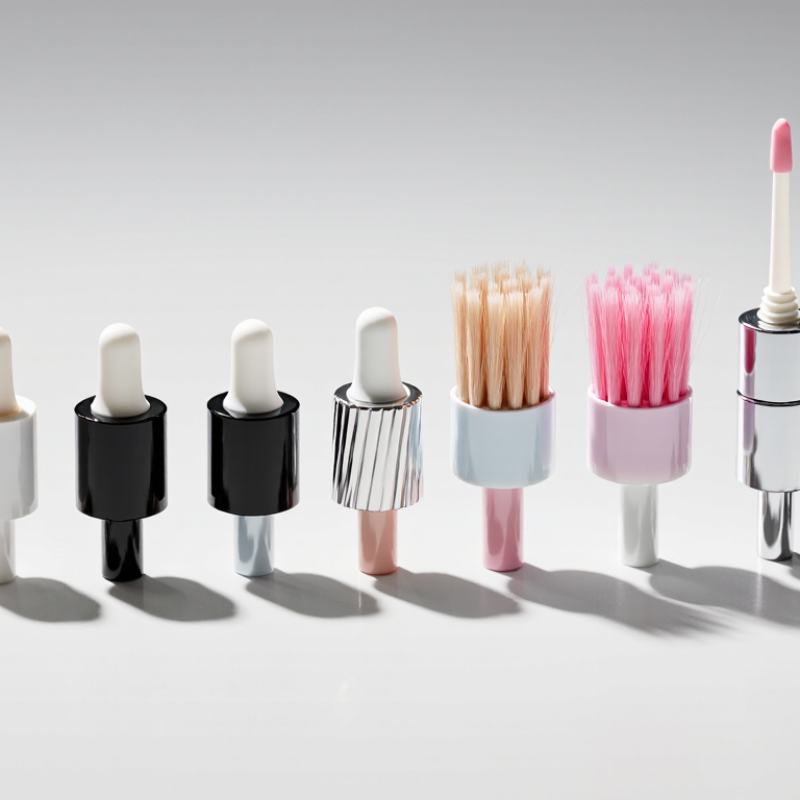
A serum applicator brush is a small tool designed to spread liquid skincare over the face with controlled contact. Its head may use soft bristles or a smooth silicone surface, depending on the design. Some brushes are built into a container; others are separate tools. The narrow tip can help reach areas beside the nose or along the jaw. It is not a treatment itself. The serum formula does the work.
Use it on clean skin and follow the product’s directions. Dispense a small amount, then glide the brush gently across the face without pressing hard. Keep strokes light. Avoid the eye area unless the product is intended for it. An applicator can feel convenient, but it does not guarantee a more even result; too much serum may collect around the brush head. Clean a reusable brush as directed and let it dry fully. Do not share it, especially when the skin is irritated. The routine can be less neat than expected. That is worth noticing.
China’s Serum Applicator Brush Manufacturing Landscape
China’s serum applicator brush manufacturing landscape combines component sourcing, molding, brush-head assembly, and quality checks. Suppliers may offer silicone tips, flocked applicators, or compact brush heads designed to reach narrow bottle openings. The National Bureau of Statistics of China reported cosmetics retail sales of RMB 414.2 billion in 2023, up 5.1% year on year. This indicates a large beauty market, not direct demand for serum brushes. That distinction matters.
Manufacturers are often assessed on tip consistency, leak compatibility, material traceability, and repeatable production—not appearance alone. Ask for samples filled with your actual serum; viscosity can change how a tip dispenses product. Check whether the applicator scrapes cleanly against the bottle neck and leaves visible residue. A polished sample can still conceal uneven output between production batches. Buyers should request batch records and practical inspection criteria. Small details count.
Tips: Test the applicator with the intended bottle and formula. Compare several samples, not just one. Ask how defects are recorded and handled. These checks take time, but skipping them can make sourcing decisions less reliable.
Criteria for Evaluating Serum Applicator Brush Manufacturers
When comparing serum applicator brush manufacturers in China, assess more than price and appearance. Request a written specification for bristle material, brush-head dimensions, handle resin, and product-contact components. Ask how the supplier checks shedding, tip alignment, and compatibility with watery or viscous formulas. A brush that feels soft on a sample may perform differently after repeated use.
Quality evidence matters. Review batch records, inspection criteria, and traceability procedures, and ask whether the factory follows cosmetic good manufacturing practices such as ISO 22716. Grand View Research’s Cosmetics Market Size, Share & Trends Analysis Report, 2024–2030, estimates the global cosmetics market at USD 262.21 billion in 2023, with projected annual growth of 4.2% from 2024 to 2030. This market figure does not measure applicator demand directly, but it signals why consistent component quality matters. Small details matter. A supplier’s test data is useful, but verify the methods and sample sizes.
Tips: Request production samples, not only showroom pieces. Test the cap, too. Fill brushes with your intended formula, store them upright and sideways, then check for leakage, drying, and bristle loss. Record results by batch; one test run is helpful, not conclusive.
Top 10 Serum Applicator Brush Manufacturers in China
Suggested Criteria for Evaluating Manufacturers
This proposed scorecard allocates 100% across six supplier-evaluation criteria. The weights are a practical evaluation framework, not results from a market survey or ratings of specific manufacturers.
Profiles of 10 Serum Applicator Brush Manufacturers in China
A useful profile of China’s serum applicator brush sector compares factory capabilities, not just catalog photos. These ten profiles are capability-based, not named-company rankings. Confirm each factory’s current equipment and records. One type molds silicone tips; another assembles flocked heads for a softer glide. Fine-bristle makers focus on controlled serum pickup, while dual-ended specialists combine brush and spatula forms. Travel-format producers design compact caps; custom-handle shops adjust length, grip, and material. Component integrators coordinate tips and handles. Packaging-focused plants manage wipers, collars, and tubes. Sampling-led teams refine prototypes. Export-focused factories emphasize inspection records and batch consistency.
Tips: Request a sample made with your intended serum. Check leakage, tip flexibility, and pickup after repeated use. Ask for material specifications and quality-control records.
A smooth sample is only a starting point. Viscous formulas may cling to bristles, while thin serums can drip from a broad tip. Compare samples under the same conditions and review defects together. Some suppliers may lack detailed performance data; note that gap before choosing a production partner.
How to Compare Manufacturers by Quality, Customization, and Supply Capacity
China’s serum applicator brush manufacturers should be compared on tested performance, not polished catalogs alone. McKinsey’s 2023 beauty-market analysis projected the global beauty market could reach about $580 billion by 2027, with roughly 6% annual growth. That forecast signals opportunity, but it does not prove demand for any single applicator design. Buyers should request brush-head samples made with the intended serum, then check pickup, release, shedding, and feel on skin. Inspect the ferrule bond and cap fit, too. Small defects matter.
Customization needs clear limits. Ask whether the supplier can adjust bristle material, tip shape, handle length, and color while keeping dimensions consistent across batches. Request a written specification and a pilot run before approving tooling. Useful checks include serum compatibility, repeated cap opening, and leakage after transport simulation. A good sample can still mislead. I would compare production samples, not just hand-finished prototypes.
For supply capacity, review recent production records, lead times, minimum order quantities, and backup plans for key materials. Ask how many lines can make the same brush and how defects are logged by lot. A factory’s stated monthly capacity is less useful without utilization and quality data. McKinsey’s growth estimate is broad, not a purchase forecast; buyers should validate their own order volumes. Even careful audits can miss a weak shift or rushed peak-season run.
FAQS
It spreads liquid skincare with controlled contact. Its head may use soft bristles or smooth silicone. The serum, not the brush, provides the skincare effect.
Start with clean skin and dispense a small amount of serum. Glide the brush gently without pressing hard. Keep strokes light. Avoid the eye area unless the product is intended for it.
No. Serum can collect around the brush head, and the result may still be uneven. A brush is convenient, but not magic.
Follow the cleaning directions and let the brush dry fully. Do not share it, especially if your skin is irritated.
Ask about bristle material, head dimensions, handle material, and product-contact parts. Check shedding, tip alignment, and how the brush handles your formula.
Fill it with your intended formula and test pickup, release, and feel on skin. Store it upright and sideways, then check for leakage, drying, and bristle loss. One test is not conclusive.
Ask whether the tip shape, bristles, handle length, or color can be adjusted. Request written specifications and a pilot run before approving tooling. A polished sample may not match production.
Review production records, lead times, minimum order quantities, and backup plans for key materials. Ask how defects are recorded by batch. A monthly capacity claim alone tells little.
Conclusion
This article explores the role of Serum Applicator Brushes in skincare packaging and explains how their brush heads, handles, and dispensing designs can support controlled, hygienic application. It also outlines China’s manufacturing landscape, where buyers may encounter suppliers with different production capabilities, customization options, and order volumes. The guide introduces practical criteria for evaluating manufacturers, including material selection, workmanship, quality-control processes, communication, and production consistency.
Profiles of ten manufacturers are organized to help readers understand the range of supplier capabilities without relying on a single measure of suitability. The final section offers a framework for comparing options by product quality, design customization, sampling and development support, supply capacity, and delivery expectations. By considering these factors together, buyers can identify manufacturers that better match their product specifications, budget, and sourcing needs.

Blog Tags: